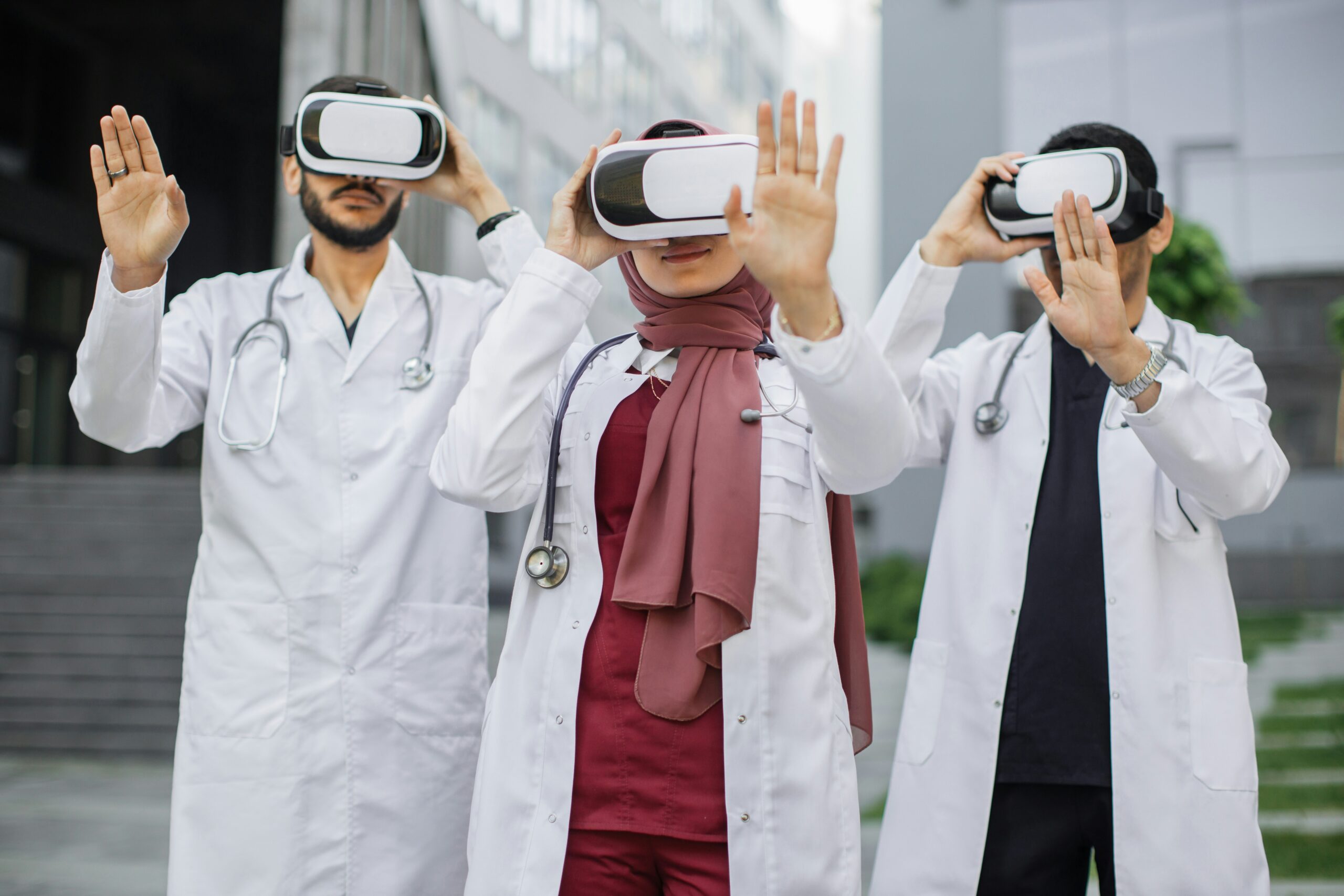
Virtual reality in healthcare is changing how we think about modern medicine. This cutting-edge technology is no longer just for entertainment or gaming. It is now leading the way in patient treatment and medical training. By placing doctors, nurses, and students in fully immersive environments, VR enables a level of understanding and preparation that textbooks and lectures can’t match. From simulated surgeries to patient empathy exercises, virtual reality is becoming an essential part of medical practice.
With the rising demand for more efficient, patient-centered care, VR offers solutions that improve precision, communication, and decision-making. This shift marks a clear transition from traditional methods to digital-first experiences. Virtual reality in healthcare not only supports technical skill development but also promotes emotional intelligence among caregivers. As a result, both patients and professionals benefit from faster recovery, fewer errors, and better overall experiences.
Medical Training Enters the Virtual World
In the past, learning complex medical procedures involved limited hands-on practice, often requiring cadavers or mannequins. But now, immersive healthcare training through VR enables practicing surgeries, diagnosing illnesses, and engaging with lifelike scenarios in a safe, controlled setting. This method allows students and residents to repeat procedures as many times as needed until they master the techniques.
The flexibility of VR training tools also enhances accessibility. Students in rural or underserved regions gain access to the same high-quality experiences as those in top-tier institutions. Not only does this level the playing field, but it also accelerates skill development, which is essential in a fast-paced, high-stakes field like healthcare. Virtual reality offers an efficient, cost-effective solution to the growing demand for highly trained professionals.
Revolutionizing Surgical Preparation and Accuracy
One of the most promising uses of virtual reality in healthcare lies in surgical planning and rehearsal. Surgeons can now explore 3D models of patient anatomy before entering the operating room. This deep dive into virtual simulations improves precision and reduces the chances of complications. The benefit is not just for doctors—it directly affects patient safety and post-op recovery.
Moreover, these tools enable entire surgical teams to coordinate more effectively. Everyone involved can rehearse the operation together, ensuring every team member is prepared. The combination of real-time collaboration and detailed anatomical mapping gives medical professionals the confidence they need for successful outcomes. It’s a giant step forward in minimizing surgical errors and boosting confidence under pressure.
Improving Patient Engagement and Recovery
While medical professionals benefit from enhanced training, patients also experience direct advantages. VR in patient care helps individuals understand their conditions better through visualizations. For example, a patient with a heart condition can view a 3D animation of their issue and how a procedure will correct it. This promotes understanding and leads to more informed treatment choices.
Beyond education, VR has shown value in pain management and mental health. Patients undergoing physical therapy or chronic pain treatments often engage in VR exercises that distract and motivate them. This approach improves participation and reduces the need for medication. In mental health, VR environments offer calming experiences and therapeutic exposure treatments that ease anxiety and stress without the pressure of clinical settings.
Addressing Emotional Intelligence in Healthcare
In many fields, empathy is essential—but in healthcare, it’s critical. Virtual reality helps healthcare workers step into a patient’s shoes through powerful simulations. These experiences offer insight into what it’s like to live with Alzheimer’s, autism, or visual impairments. As a result, caregivers become more patient, understanding, and better equipped to offer compassionate care.
These empathy-based simulations foster better communication and emotional intelligence, especially for new professionals who may lack firsthand experience with such conditions. Integrating VR into emotional training ensures well-rounded development, encompassing both technical and interpersonal skills. This is crucial in creating a culture of care that addresses patients’ full range of needs.
Virtual Consultations and Telepresence Tools
As healthcare becomes increasingly digital, virtual reality supports new modes of care delivery. VR-powered telepresence allows doctors to consult with patients from afar more interactively. Rather than relying on flat video screens, these experiences offer a more natural, presence-based interaction that builds trust and connection.
This is especially useful in rural or high-risk areas where access to specialists may be limited. Virtual reality enables a surgeon in one city to guide a team in another region through complex procedures. These collaborative efforts reduce the need for patient travel and help hospitals optimize staff and resources. It’s a powerful example of how technology bridges geographical and logistical gaps.
Enhancing Rehabilitation and Physical Therapy
Recovering from injury or surgery can be slow and painful. But virtual reality adds a layer of engagement that helps patients stay motivated. Through gamified therapy sessions, patients are more likely to follow through with exercises that otherwise feel repetitive or boring. The sense of achievement and progress keeps them on track and improves outcomes.
In addition, therapists can monitor movement and progress in real-time through VR data collection. This allows for personalized adjustment of therapy routines without the need for constant in-person visits. Not only does this make rehab more effective, but it also makes it more accessible, especially for those who struggle to attend traditional sessions due to mobility or location issues.
Overcoming Barriers and Embracing the Future
Despite the clear benefits, challenges still exist in adopting virtual reality in healthcare. High equipment costs, insufficient technical training, and limited integration with existing medical systems are hurdles providers must address. However, as demand grows and the technology becomes more affordable, these barriers are steadily breaking down.
More institutions are now investing in VR as part of a long-term strategy. Medical schools, hospitals, and even outpatient clinics are exploring ways to embed virtual tools into daily practice. As standards and best practices emerge, healthcare providers can rely on proven methods to train, treat, and connect more effectively than ever before. The momentum behind VR is strong—and it’s only gaining speed.
The Future of Medicine is Virtually Here
Virtual reality in healthcare is no longer a distant vision. It is here and transforming how care is delivered, how doctors are trained, and how patients recover. This technology bridges gaps between theory and practice, between providers and patients, and between today’s limits and tomorrow’s possibilities. Its ability to simulate, educate, and connect makes it one of the most important innovations in modern medicine.
As the technology continues to evolve, so too will its impact on every corner of the healthcare system. From operating rooms to patient bedrooms, virtual reality promises to make care safer, smarter, and more compassionate. For anyone involved in health and healing, the message is clear: the future is virtual, and the future is now.