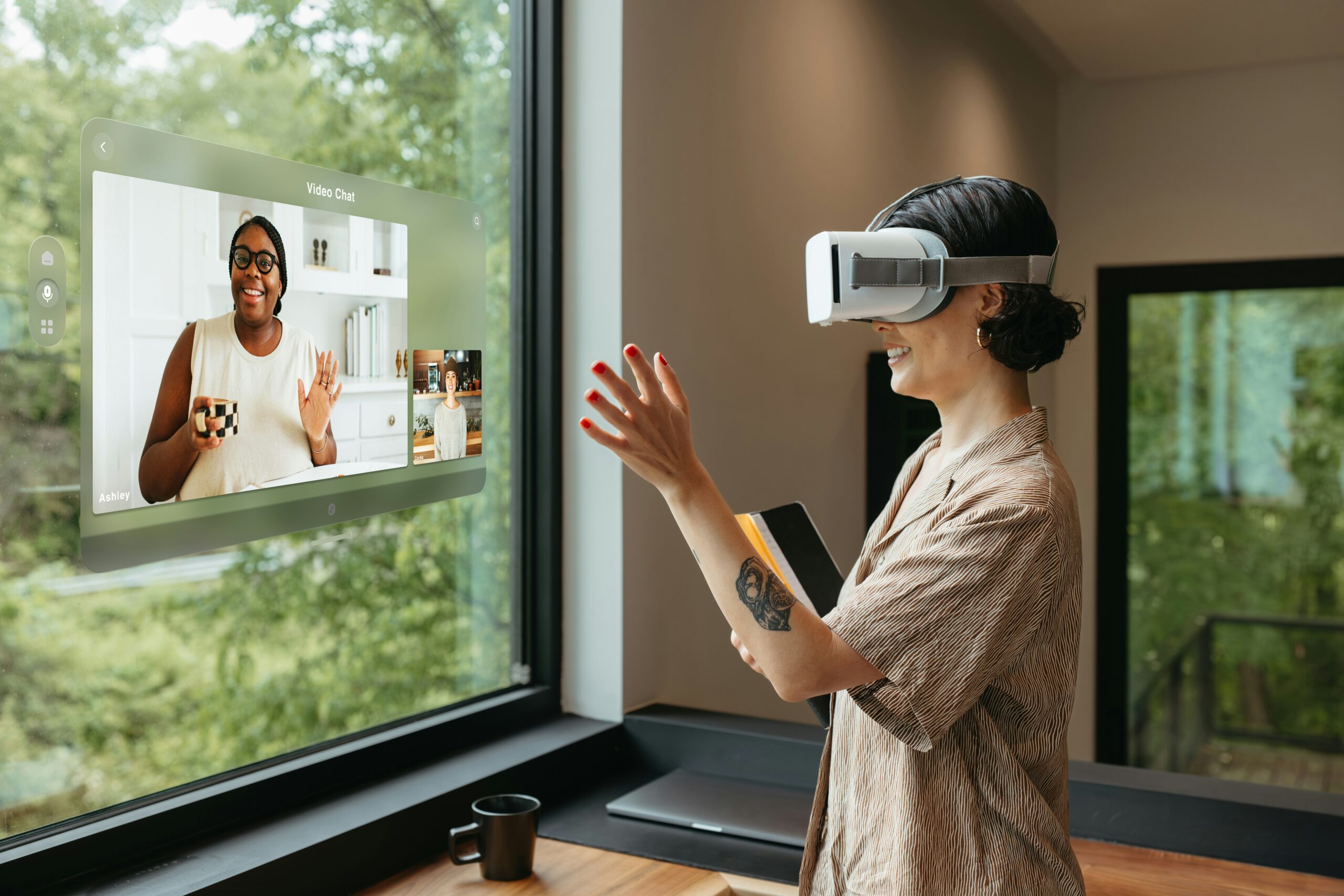
Virtual reality (VR) is reshaping the way architects and designers approach their work. By creating fully immersive environments, VR allows professionals to step inside their designs before construction begins, making it easier to visualize, modify, and perfect spaces. Instead of relying solely on blueprints or digital screens, architects and designers can experience their projects at a human scale, walking through rooms, assessing layouts, and testing functionality in a virtual setting. This hands-on approach changes how designs are conceived, presented, and refined.
One of the main advantages of VR in architecture is its ability to enhance communication. Clients often struggle to interpret two-dimensional drawings or computer models, but VR makes ideas tangible. When clients can virtually explore a space, they understand proportions, flow, and aesthetics more clearly. This clarity reduces misunderstandings, accelerates approvals, and strengthens the relationship between designers and clients. By bridging the gap between imagination and reality, VR allows everyone involved to engage with the project in a meaningful way.
Improving Design Accuracy and Efficiency
VR also improves design accuracy by allowing architects to test ideas in real time. Designers can move through rooms, adjust furniture placement, and modify layouts while instantly seeing the impact of their changes. This interactivity reduces errors that might appear later in construction and helps identify design flaws before they become costly problems. With VR, architects can iterate more freely, experimenting with lighting, materials, and spatial relationships without any risk.
Efficiency gains extend beyond individual projects. Teams working on complex buildings or large-scale developments can use VR to coordinate better. By reviewing spaces together in a shared virtual environment, architects, engineers, and contractors can identify potential conflicts, such as structural issues or workflow bottlenecks, before they occur on site. This proactive approach saves time, reduces costs, and improves the overall quality of construction projects.
Enhancing Creativity and Innovation
Another way VR supports architects and designers is by unlocking creativity. Immersive environments allow professionals to explore unconventional ideas and experiment with forms, textures, and layouts in ways that are difficult to replicate on paper or a flat screen. Designers can push boundaries, test bold concepts, and immediately assess how their choices affect a space’s feel. VR encourages risk-taking because changes are easy to implement, and the consequences are virtual, not permanent.
Additionally, VR can help architects and designers collaborate creatively with clients and stakeholders. When multiple people enter a virtual model, they can suggest adjustments, discuss aesthetic preferences, and visualize alternative options together. This collective exploration leads to more innovative solutions, as different perspectives refine and enhance the design. By making experimentation both practical and interactive, VR empowers creativity while maintaining precision.
Supporting Client Presentations and Marketing
Presenting designs has always been a challenge, especially when clients are not trained to interpret plans or 3D models. VR changes presentations into interactive experiences, allowing clients to walk through their future homes, offices, or public spaces. They can see natural light at different times of day, experience room sizes, and even sense textures and materials. This level of immersion creates a memorable and convincing experience that strengthens client confidence.
From a marketing perspective, VR adds a competitive edge. Firms can showcase their designs in ways that go beyond traditional renderings or slideshows. Potential clients can explore virtual tours of proposed developments, which helps convey value, functionality, and aesthetic appeal. By leveraging VR in presentations and marketing efforts, architects and designers not only communicate more effectively but also differentiate themselves in a crowded market.
Facilitating Collaboration Across Teams
Modern architecture often involves collaboration between multiple disciplines, including structural engineering, interior design, and landscape architecture. VR simplifies collaboration by creating shared virtual workspaces where teams can meet, review, and modify designs together. Remote teams can enter the same virtual model, discuss ideas in real time, and make changes that everyone can see immediately. This reduces miscommunication, keeps everyone on the same page, and streamlines the design process.
VR also makes it easier to involve stakeholders who cannot be physically present. Clients, city planners, or contractors can join virtual meetings from anywhere in the world to review and approve designs as if they were walking the site in person. By facilitating seamless collaboration across distances, VR ensures that complex projects move forward efficiently and with fewer errors.
Integrating Sustainability and Functionality
VR can also help architects and designers focus on sustainability and functionality. By simulating real-world conditions, professionals can test energy efficiency, airflow, lighting, and material performance. VR enables designers to visualize how a building will perform under different scenarios, which can inform better choices in materials, layout, and environmental design. This proactive approach supports sustainable architecture while ensuring that buildings remain practical and comfortable for occupants.
Moreover, VR allows for iterative improvements in functionality. Designers can evaluate circulation patterns, access points, and workflow in a virtual model, ensuring that the space supports intended activities. By identifying inefficiencies early, VR helps deliver projects that are both aesthetically pleasing and highly functional. This combination of creativity, sustainability, and practicality demonstrates how VR can elevate architecture and design to a new level.
Looking Ahead: The Future of VR in Architecture
As technology continues to evolve, VR is likely to become an essential tool for architects and designers. Advances in hardware, software, and visualization techniques will make virtual models more realistic, interactive, and responsive. Artificial intelligence may also integrate with VR, offering predictive design suggestions, automated adjustments, and more intelligent simulations. This future promises faster project development, better client engagement, and higher-quality designs.
Ultimately, virtual reality is changing the way architects and designers work. It enhances accuracy, creativity, collaboration, and sustainability while making client presentations more compelling. By allowing professionals and their clients to immerse themselves in spaces before construction begins, VR helps create better, more functional, and more beautiful designs. The technology is not just a tool for visualization—it is a platform for innovation, communication, and problem-solving that can transform the architectural and design industry.