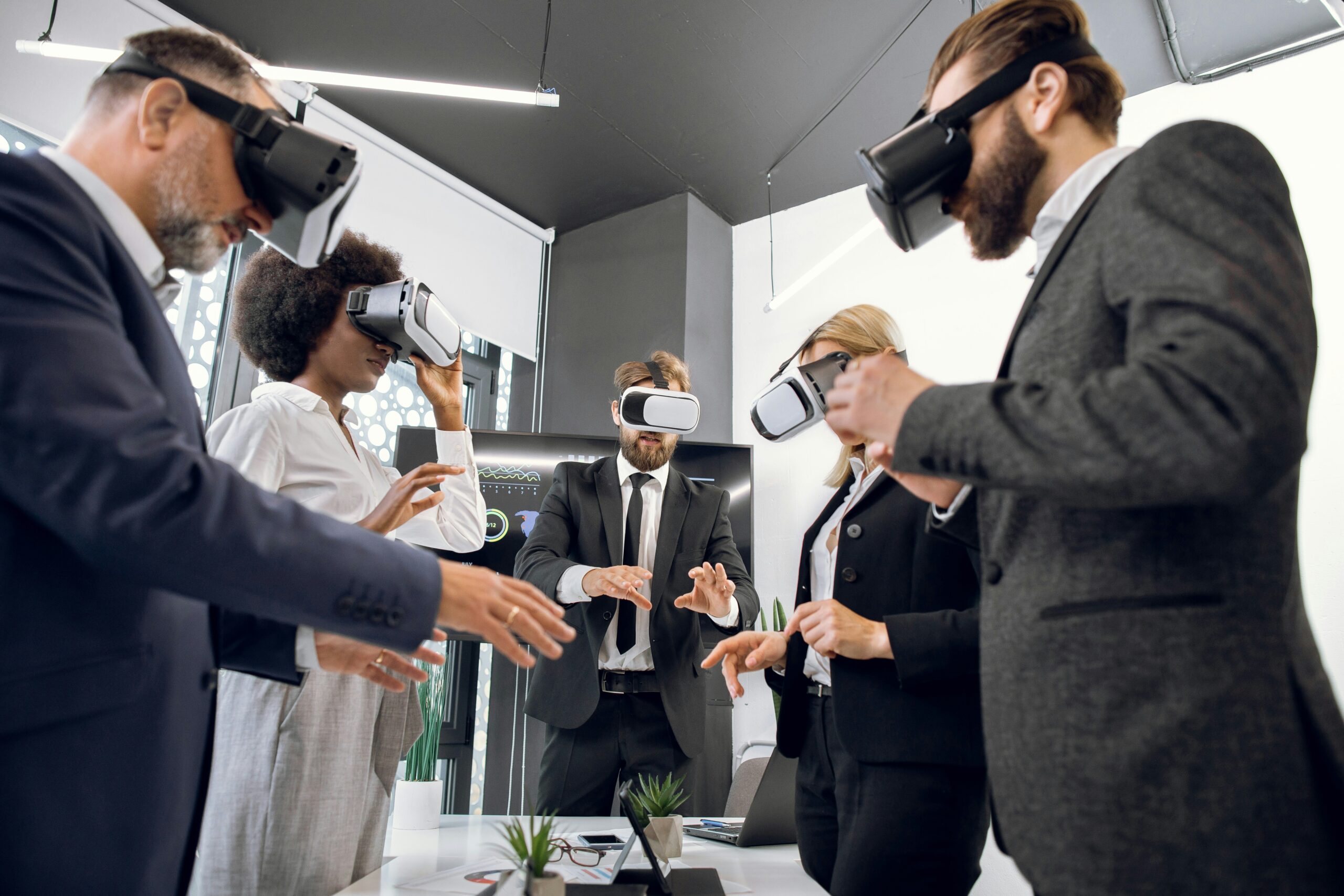
Virtual reality is rapidly reshaping how professionals learn, collaborate, and develop essential workplace skills. Once viewed primarily as an entertainment technology, VR has evolved into a powerful training and development tool used by companies across healthcare, engineering, education, manufacturing, and corporate environments. By creating immersive digital environments, virtual reality allows professionals to practice tasks, explore scenarios, and build experience in ways that traditional training methods cannot match.
As industries face rapid technological change and increasing skill demands, organizations are seeking more effective ways to prepare their workforces. Immersive VR experiences offer a solution by enabling realistic, interactive learning that bridges the gap between theory and practice. Through simulated environments, professionals have the opportunity to experiment, make decisions, and learn from outcomes without real-world risks.
The Rise of Virtual Reality in Professional Training
The adoption of virtual reality in professional training has accelerated as companies recognize its ability to deliver engaging and practical learning experiences. Unlike conventional training programs that rely on lectures or static content, VR places learners directly inside realistic situations. Participants interact with digital tools, environments, and characters that replicate real workplace conditions.
This immersive approach encourages professionals to participate rather than passively observe. When individuals perform tasks within a simulated environment, they develop practical skills and gain confidence in their abilities. VR training also allows organizations to standardize learning experiences across departments and locations, ensuring that every employee receives the same level of preparation.
Another important factor behind the rise of VR training is its flexibility. Companies can design simulations tailored to specific job roles, industry requirements, or operational challenges. This customization enables addressing unique training needs while maintaining consistent quality across programs.
Removing Limitations of Traditional Learning Methods
Traditional professional development programs often struggle to recreate complex workplace scenarios. Classroom discussions and instructional videos may explain procedures, but they rarely capture the pressure, unpredictability, or real-time decision-making involved in actual work environments. Virtual reality overcomes these limitations by placing professionals inside interactive simulations.
Within a VR environment, participants can practice responding to emergencies, managing projects, or communicating with clients. These experiences closely mirror real-world situations, allowing professionals to develop practical skills while remaining in a safe, controlled environment. The ability to repeat simulations also enables learners to refine their techniques and improve performance over time.
VR also reduces logistical barriers that often accompany traditional training programs. Instead of organizing large in-person sessions or transporting employees to specialized facilities, organizations can deliver immersive experiences through VR headsets. This approach saves time, lowers costs, and allows employees to complete training at convenient times.
Strengthening Collaboration in Virtual Workspaces
Modern workplaces increasingly rely on remote teams and distributed workforces. While digital communication tools help maintain connectivity, they often lack the sense of presence and interaction found in face-to-face meetings. Virtual reality introduces a new dimension to collaboration by creating shared digital spaces where professionals can work together in real time.
In virtual workspaces, participants can gather around digital models, review project plans, or brainstorm ideas as if they were in the same physical room. Avatars represent each participant, allowing them to communicate through gestures, voice, and shared visual content. This immersive interaction helps strengthen teamwork and improve communication among remote employees.
Companies are also using VR collaboration tools for training workshops and professional conferences. Participants from different locations can join the same virtual environment, interact with instructors, and practice skills together. This format creates a more engaging experience than traditional online meetings and encourages active participation.
Building Practical Skills Through Simulation
One of the greatest strengths of immersive virtual reality is its ability to simulate complex professional environments. These simulations replicate equipment, procedures, and workplace conditions with impressive detail. Professionals can interact with digital tools and systems exactly as they would in their real jobs.
For example, medical professionals can practice surgical procedures using VR simulations that replicate operating rooms and patient anatomy. Engineers can explore digital prototypes of machinery before building physical models. Emergency responders can rehearse disaster scenarios to improve coordination and preparedness.
These simulated environments allow professionals to learn through experience rather than memorization. When individuals perform tasks repeatedly in realistic scenarios, they develop muscle memory and sharpen their decision-making abilities. This hands-on learning approach helps translate training into real-world performance.
Enhancing Safety and Risk Awareness
In many industries, training involves activities that can pose safety risks if performed incorrectly. Construction, manufacturing, aviation, and energy sectors all require workers to handle complex equipment and potentially hazardous environments. Virtual reality provides a safe space where employees can learn these tasks without risking their safety.
In simulations, professionals can practice safety procedures, identify potential hazards, and respond to emergencies. If an error occurs, the simulation can pause and guide the user, allowing them to try again. This process encourages learning through experimentation while preventing accidents.
VR training also helps organizations reinforce a culture of safety. By experiencing realistic scenarios that demonstrate the consequences of unsafe actions, employees develop a deeper understanding of risk management. This awareness can lead to improved compliance with safety protocols and fewer workplace incidents.
The Expanding Future of Immersive Learning
The future of professional development is increasingly connected to immersive technologies. Advances in graphics processing, motion tracking, and artificial intelligence are making virtual reality experiences more realistic and interactive. As these technologies continue to evolve, VR training will become even more effective and widely adopted.
Emerging platforms are already incorporating intelligent systems that adapt simulations based on a learner’s behavior and performance. These systems can provide personalized feedback, adjust difficulty levels, and highlight areas that require improvement. Such adaptive learning environments make professional development more targeted and efficient.
Organizations that invest in immersive VR experiences today are preparing their workforce for the demands of tomorrow. By embracing innovative training tools, companies empower professionals to build confidence, expand their capabilities, and thrive in rapidly changing industries. Virtual reality is not just transforming training programs; it is redefining how professionals learn, collaborate, and grow in the modern workplace.