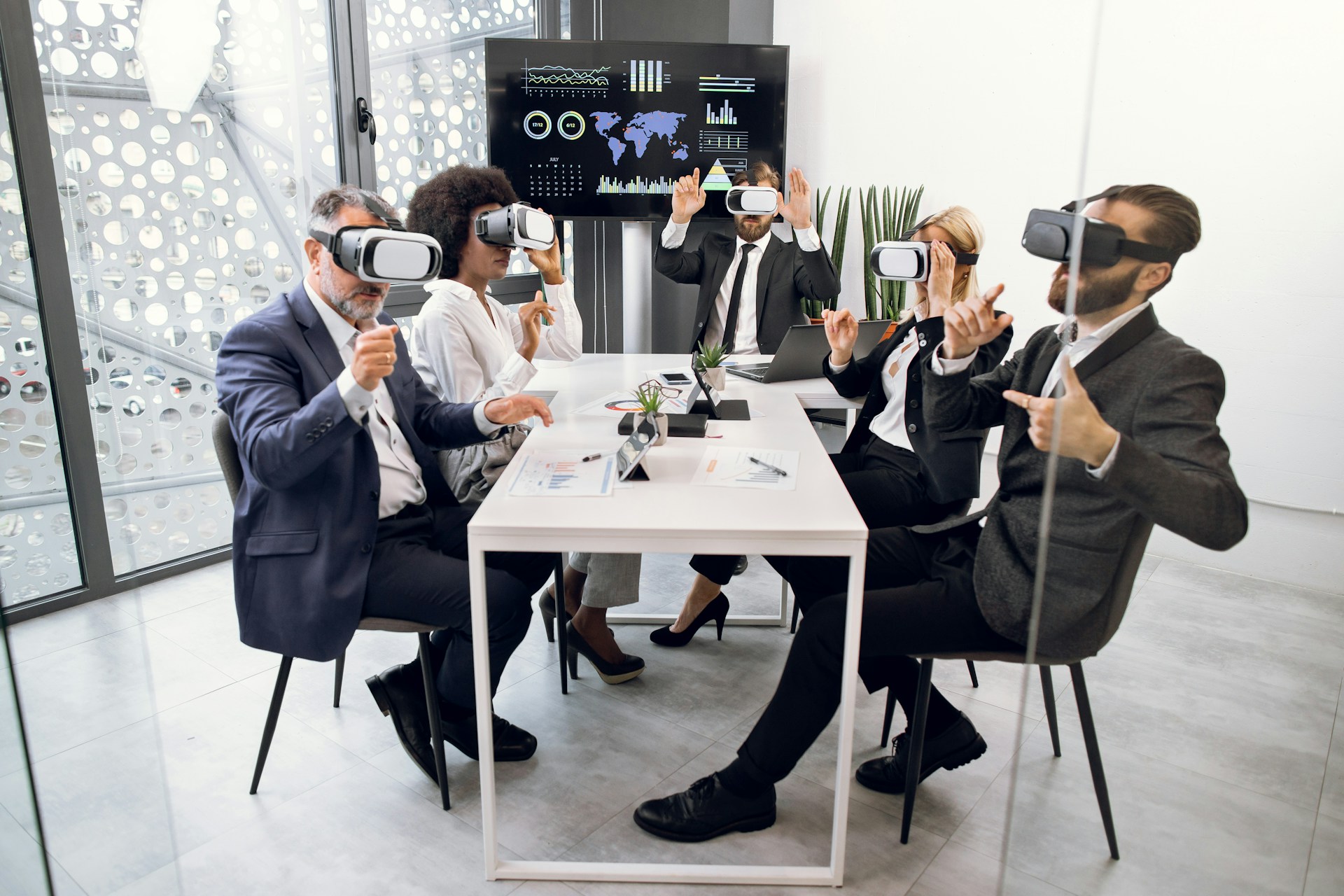
Virtual reality in business innovation is transforming the way companies operate, compete, and grow in an increasingly digital economy. Once associated mainly with gaming and entertainment, virtual reality has matured into a strategic business technology that delivers measurable value across industries. Organizations are adopting immersive solutions to improve training, enhance customer engagement, streamline product development, and create entirely new business models.
At its core, business innovation through virtual reality involves immersive digital environments that simulate real or imagined scenarios. Through headsets and interactive software, users can explore three-dimensional spaces and interact with digital elements as if they were physically present. This level of immersion allows companies to reimagine processes that were once limited by geography, cost, or safety concerns.
Businesses are under constant pressure to innovate while controlling expenses. Virtual reality offers a unique balance between creativity and efficiency. By replacing certain physical activities with digital simulations, companies can experiment, refine ideas, and test solutions without significant risk. This positive disruption is not about replacing traditional methods entirely but enhancing them in ways that unlock new potential.
Virtual Reality in Business Innovation and Workforce Development
One of the most impactful applications of virtual reality in business innovation lies in employee training and professional development. Traditional training programs often depend on classroom lectures, printed materials, or shadowing experienced workers. While these methods can be useful, they may lack engagement and real-world realism.
Virtual reality changes this dynamic by immersing employees in lifelike scenarios. In healthcare, medical professionals can practice surgical techniques in a simulated environment that mirrors actual operating rooms. In manufacturing, workers can learn to operate complex machinery without exposure to physical hazards. In customer service, employees can engage with virtual clients to refine communication and problem-solving skills.
This immersive approach strengthens knowledge retention because individuals learn by doing rather than simply observing. When employees actively participate in realistic simulations, they build confidence and competence. Mistakes become learning opportunities rather than costly setbacks. Organizations benefit from a safer training environment and a more prepared workforce.
Virtual reality in business innovation also supports remote learning. As companies expand across regions and embrace hybrid work models, immersive training can be delivered consistently regardless of location. Teams in different cities or countries can participate in the same interactive sessions, ensuring uniform standards and shared experiences. This scalability reduces travel costs and enhances organizational cohesion.
Beyond technical skills, virtual reality can support leadership development and soft skills training. Simulated negotiation scenarios, crisis management exercises, and team collaboration challenges provide valuable practice in a controlled setting. By investing in immersive learning, businesses cultivate adaptable and resilient professionals who are better equipped to navigate change.
Elevating Customer Experience Through Immersion
Customer expectations continue to rise in the digital age. Consumers seek personalized, engaging, and memorable interactions with brands. Virtual reality in business innovation enables companies to deliver experiences that go far beyond traditional advertising and online browsing.
In retail, virtual showrooms allow customers to explore products in an interactive environment. Shoppers can examine items from multiple angles, visualize how furniture fits within their homes, or customize features in real time. This immersive engagement increases confidence in purchasing decisions and reduces uncertainty often associated with online shopping.
The real estate sector has embraced virtual property tours that allow prospective buyers to walk through homes and commercial spaces without traveling. This approach expands market reach and saves time for both clients and agents. Similarly, the travel and hospitality industry uses immersive previews to showcase destinations, accommodations, and attractions, inspiring trust and excitement before booking.
Virtual reality in business innovation also strengthens brand storytelling. Companies can create immersive narratives that place customers at the heart of their mission, values, or product journeys. Instead of passively watching a promotional video, users can experience a story from within. This emotional connection deepens brand loyalty and differentiates businesses in crowded markets.
By transforming how customers interact with products and services, virtual reality fosters stronger relationships and drives higher engagement. Businesses that embrace immersive strategies position themselves as forward-thinking and customer-centric.
Revolutionizing Product Design and Operational Efficiency
Innovation in product development often requires extensive testing, iteration, and collaboration. Virtual reality in business innovation streamlines these processes by enabling digital prototyping and immersive design reviews. Engineers and designers can create detailed models and interact with them in virtual space before building physical prototypes.
This approach reduces material waste and accelerates decision-making. Teams can identify design flaws, test functionality, and refine features in real time. Because adjustments are made digitally, companies avoid the costs and delays associated with multiple physical revisions. The result is a more agile development cycle and faster market entry.
Manufacturing operations also benefit from immersive simulation. Production lines can be modeled virtually to analyze workflow, identify inefficiencies, and improve layout planning. By visualizing processes before implementation, organizations reduce disruptions and enhance productivity. Employees can familiarize themselves with new equipment or procedures in a simulated environment, ensuring smoother transitions.
Global collaboration becomes more dynamic through shared virtual spaces. Teams from different regions can meet inside a digital model of a product or facility, discuss changes, and make decisions together. This immersive interaction goes beyond traditional video conferencing by allowing participants to engage directly with the subject of discussion.
Virtual reality in business innovation also supports sustainability. By reducing the need for physical prototypes and minimizing travel for meetings and training, companies lower their environmental footprint. This alignment with sustainable practices enhances corporate responsibility and brand reputation.
The Expanding Role of Virtual Reality in Business Innovation
As technology continues to evolve, the influence of virtual reality in business innovation is expected to deepen. Integration with artificial intelligence and data analytics enhances personalization and performance measurement. Immersive platforms can adapt experiences based on user behavior, providing tailored training modules or customized product recommendations.
The emergence of shared digital environments offers new opportunities for collaboration and commerce. Businesses are exploring virtual workspaces where employees interact as avatars, participate in brainstorming sessions, and attend immersive events. These environments foster creativity and connection, especially in distributed teams.
Small and medium enterprises are increasingly recognizing the value of immersive technology. As hardware becomes more accessible and software platforms more user-friendly, adoption barriers decrease. Companies of various sizes can experiment with pilot programs and gradually scale successful initiatives.
Implementing virtual reality in business innovation requires thoughtful planning. Organizations must consider user experience design, cybersecurity, and employee acceptance. Clear objectives and measurable outcomes help ensure that investments deliver meaningful returns. When aligned with strategic goals, immersive technology becomes a catalyst for sustainable growth.
Virtual reality in business innovation represents more than a technological trend. It is a transformative force that reshapes training, customer engagement, product development, and operational strategy. By embracing immersive solutions, companies unlock new levels of creativity, efficiency, and competitiveness.
In a rapidly changing marketplace, adaptability is essential. Virtual reality empowers organizations to experiment boldly, collaborate seamlessly, and deliver exceptional experiences. Businesses that integrate immersive technology into their core strategies are not only responding to disruption but leading it, setting new standards for innovation and long-term success.