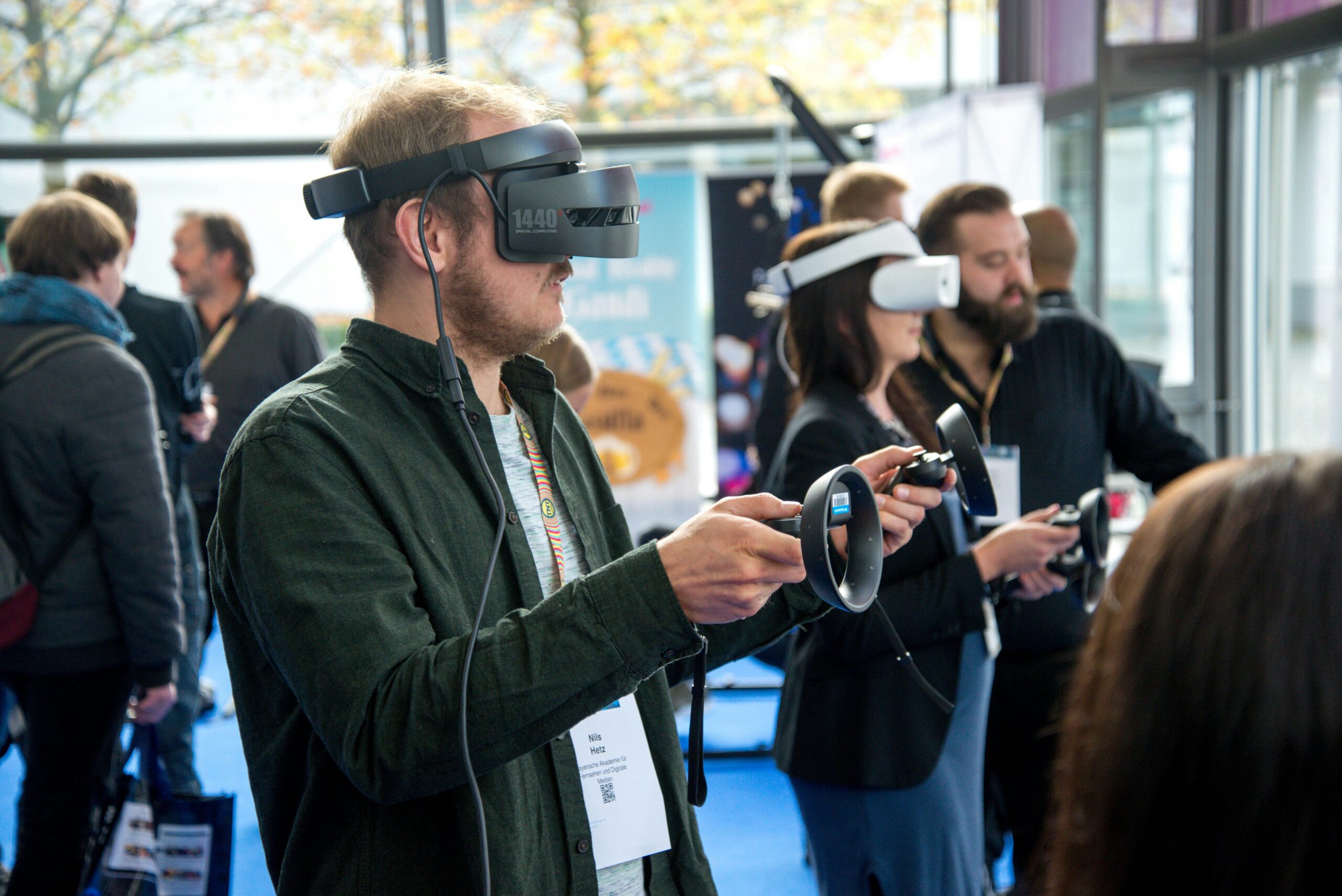
Immersive technologies continue to reshape how people interact with digital environments. Augmented reality, virtual reality, and mixed reality now play a central role in this transformation. These tools do not exist in isolation. Instead, they work together to create connected and dynamic experiences that improve how people learn, communicate, and engage with content.
As immersive technologies evolve, they become more integrated across platforms and industries. Businesses, educators, and developers now combine AR, VR, and MR to build experiences that feel more natural and effective. This guide explains how immersive technologies work together and why their combined power matters in today’s digital landscape.
Understanding Immersive Technologies and Their Core Purpose
Immersive technologies focus on creating environments where users can interact with digital content in meaningful ways. These technologies aim to increase engagement by placing users inside experiences or by enhancing their real-world surroundings. As a result, immersive technologies have a greater impact than traditional digital tools.
AR, VR, and MR each serve a unique purpose, yet they share a common goal. They all aim to create a sense of presence. While AR enhances the real world, VR replaces it, and MR blends both. When these technologies work together, they create a spectrum of immersive experiences that adapt to different needs and situations.
Moreover, immersive technologies continue to improve as hardware and software evolve. Developers now design systems that support seamless transitions between AR, VR, and MR. This integration helps users move between experiences without disruption, which strengthens engagement and usability.
How Augmented Reality Supports Real World Interaction
Augmented reality plays a key role in immersive technologies by connecting digital content with the physical world. It allows users to see and interact with virtual elements without leaving their environment. This makes AR practical and easy to adopt across many industries.
Retail businesses use AR to improve customer experiences. Shoppers can visualize products in their own space before making a purchase. This approach increases confidence and reduces uncertainty. As a result, AR enhances customer satisfaction and supports better decision-making.
In addition, AR supports training and education by making learning more interactive. Students can explore complex topics through three-dimensional models. Workers can receive real-time instructions while performing tasks. Therefore, AR enhances both understanding and efficiency in real-world scenarios.
The Role of Virtual Reality in Deep Immersion
Virtual reality takes immersive technologies to a deeper level by creating fully digital environments. Users enter these environments through headsets that block out the physical world. This allows them to focus entirely on the experience, which increases engagement and realism.
Industries use VR for training because it creates safe and controlled environments. For example, medical professionals practice procedures without real-world risks. Pilots train in simulations that prepare them for complex situations. As a result, VR improves skill development and reduces training costs.
Furthermore, VR enhances collaboration by creating virtual spaces where people can meet and interact. Teams can work together in shared environments even if they are far apart. This approach improves communication and strengthens teamwork, especially in remote work settings.
Mixed Reality as the Bridge Between AR and VR
Mixed reality blends augmented and virtual reality, combining digital and physical elements. It allows users to interact with virtual objects that respond to real-world conditions. This creates a more advanced, natural experience than either AR or VR alone.
MR plays a vital role in industries that require precision and real-time interaction. Engineers use MR to visualize designs and test ideas in real environments. Workers follow digital instructions displayed directly on the equipment. This reduces errors and improves productivity.
At the same time, MR enhances collaboration by allowing teams to interact with shared digital models. Designers, developers, and engineers can work together in the same space even if they are in different locations. Therefore, MR strengthens innovation and speeds up development processes.
How AR, VR, and MR Work Together in Immersive Technologies
Immersive technologies reach their full potential when AR, VR, and MR work together. Each technology contributes unique strengths that complement the others. AR provides real-world context, VR offers full immersion, and MR creates interaction between both environments.
For example, a training program may start with AR to introduce concepts in a real environment. Then, it may shift to VR for a fully immersive simulation. Finally, MR can allow users to apply their skills in a mixed environment. This seamless transition creates a complete learning experience.
In addition, businesses combine these technologies to improve customer engagement. A brand may use AR for product previews, VR for virtual showrooms, and MR for interactive demonstrations. This integrated approach creates a stronger connection with customers and enhances the overall experience.
Industry Applications of Integrated Immersive Technologies
Immersive technologies are transforming industries by providing innovative solutions. In healthcare, AR, VR, and MR work together to improve training, diagnostics, and treatment planning. Medical professionals can visualize complex data and practice procedures with greater accuracy.
Education also benefits from integrated immersive technologies. Teachers use AR to enhance lessons, VR to create virtual classrooms, and MR to enable interactive learning experiences. This combination improves engagement and helps students understand complex subjects.
In business, immersive technologies support marketing, design, and collaboration. Companies use AR for interactive campaigns, VR for product demonstrations, and MR for design processes. This integration improves communication and drives innovation across organizations.
Challenges in Combining AR, VR, and MR
Despite their advantages, immersive technologies face challenges when integrated. High development costs and hardware requirements can limit adoption. Businesses must invest in the right tools and expertise to implement these technologies effectively.
User experience also presents challenges. Some users may find it difficult to switch between AR, VR, and MR environments. Developers must create systems that ensure smooth transitions and intuitive interactions. This improves usability and encourages adoption.